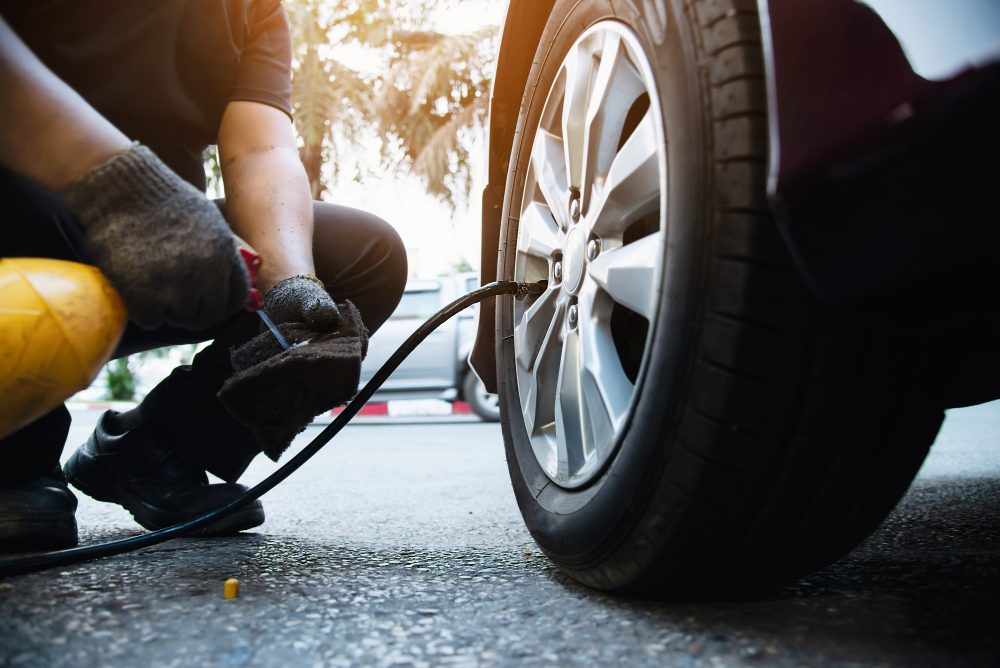

When modern drivers think about vehicle safety, advanced electronic features like lane-departure warnings, automatic emergency braking, adaptive cruise control, and blind-spot monitors often come to mind. While these technologies provide exceptional support, a vehicle safety system is ultimately only as capable as its single point of contact with the ground: the tires.
The entire weight of a car, along with its ability to accelerate, steer, and stop, relies on four small patches of rubber, each roughly the size of an adult hand. When tires are neglected, even the most advanced automotive safety technologies become compromised. Proactive tire maintenance is not simply a matter of extending tread longevity or saving money on fuel; it is a fundamental pillar of personal and public road safety. Understanding how tire condition dictates vehicle behavior helps drivers protect themselves, their passengers, and everyone sharing the road.
The Critical Role of Proper Tire Inflation
Maintaining correct tire pressure is the single most important aspect of routine tire care. Air pressure supports the vehicle load, dictates the shape of the tire contact patch, and regulates internal thermal build-up during travel. Operating on incorrectly inflated tires introduces serious hazards that compromise vehicle dynamics.
The Hidden Dangers of Under-Inflation
Under-inflation is the most prevalent tire maintenance issue on the road today. When a tire lacks adequate air pressure, its internal structural integrity weakens.
-
Excessive Heat Accumulation: As an under-inflated tire rolls, its sidewalls flex excessively. This continuous mechanical flexing generates extreme internal heat. Heat is the primary enemy of rubber compounds and structural belts, significantly increasing the likelihood of sudden tire blowouts at highway speeds.
-
Compromised Emergency Handling: Low pressure causes the tire tread to deform and roll over onto the shoulder during sharp turns. This makes steering response sluggish and unpredictable, reducing the driver ability to navigate around sudden roadway obstacles.
-
Increased Braking Distances: An under-inflated tire fails to maintain an even contact footprint, concentrating pressure on the outer shoulders while lifting the center tread. This irregular contact reduces friction against the pavement, significantly extending stopping distances during panic stops.
-
Accelerated Shoulder Wear: Driving on low pressure wears down the outer edges of the tire rapidly, forcing premature replacement.
The Consequences of Over-Inflation
While under-inflation causes flex and heat, over-inflation introduces its own set of distinct safety hazards.
-
Reduced Contact Patch Area: Excess pressure causes the center of the tread to bulge outward, reducing the total surface area of rubber touching the road. Less rubber on the asphalt translates directly to reduced traction during cornering and braking.
-
Elevated Risk of Impact Damage: An over-inflated tire becomes stiff and unyielding. When striking potholes, curbs, road debris, or frost heaves, the tire cannot flex to absorb the energy, making it far more vulnerable to internal ply separation and sudden punctures.
-
Harsh Ride and Accelerated Center Wear: Stiff tires transmit excessive road vibrations into the suspension and chassis while wearing down the center tread line prematurely.
Tread Depth and Wet-Weather Traction
Tire tread is engineered with complex channels, sipes, and grooves designed for a specific purpose: evacuating water away from the tire footprint to keep rubber in direct contact with the road surface.
Understanding Hydroplaning
When a vehicle travels over a wet roadway, the tire must displace gallons of water every second. If the tread depth is insufficient to channel this volume of water away, water builds up in front of the tire faster than it can escape.
-
Loss of Surface Contact: The accumulated water forces itself underneath the tire, creating a thin, pressurized liquid film that lifts the rubber off the asphalt.
-
Total Control Failure: Once hydroplaning occurs, the vehicle is effectively floating on water. Steering input produces zero directional change, and applying the brakes will not slow the vehicle down, resulting in complete, terrifying loss of vehicular control.
Measuring Tread Wear Effectively
Legal minimum tread depth across most United States jurisdictions is two-thirty-seconds of an inch. However, real-world wet-weather testing demonstrates that stopping distances and hydroplaning resistance deteriorate drastically once tread falls below four-thirty-seconds of an inch.
-
The Penny Test: Place an upside-down penny into several tread grooves. If the top of Abraham Lincoln head remains visible across the tread, the tire is below two-thirty-seconds of an inch and must be replaced immediately.
-
The Quarter Test: For safer wet-weather margins, use a quarter. If the tread covers the top of George Washington head, you have at least four-thirty-seconds of an inch of remaining tread.
-
Tread Wear Indicator Bars: Modern tires feature molded rubber bars nestled within the deep grooves. When the surrounding tread wears flush with these indicator bars, the tire has reached its legal wear limit.
Wheel Alignment and Suspension Geometry
Even brand-new tires cannot ensure safety if the vehicle wheel alignment is improperly calibrated. Wheel alignment refers to the precise mechanical angles at which the wheels are mounted relative to the vehicle frame and each other.
-
Camber Misalignment: Camber is the inward or outward tilt of the tire when viewed from the front. Incorrect camber concentrates vehicle weight on the inner or outer edge of the tire, causing severe, localized wear and reduced straight-line braking grip.
-
Toe Inconsistencies: Toe represents the inward or outward angle of the tires when viewed from above. Improper toe angles force the tires to scrub sideways against the road as they roll forward, generating rapid, uneven tread wear and creating directional instability that makes the car wander across lanes.
-
Steering Pull and Driver Fatigue: Misalignment creates a constant pulling force toward one side of the road. Fighting this continuous pull fatigues the driver on long trips and impairs the vehicle ability to track straight during hard braking.
The Importance of Regular Tire Rotation and Balancing
Tires do not wear evenly across all four positions on a vehicle. Front tires endure heavy steering stresses and carry the majority of braking loads, while drive wheels experience additional torque friction.
-
Uniform Tread Depletion: Rotating tires between front and rear axles every five thousand to seven thousand miles distributes wear evenly, ensuring all four tires maintain consistent handling characteristics.
-
Dynamic Wheel Balancing: Over time, minor weight discrepancies develop around the circumference of the wheel and tire assembly. Unbalanced wheels cause high-speed vibrations that agitate the steering wheel, increase driver fatigue, and accelerate wear on wheel bearings, ball joints, and shock absorbers.
Seasonal Demands and Temperature Fluctuations
Tire performance is intimately linked to ambient temperature and weather conditions. Rubber compounds are chemically formulated to operate within specific thermal windows.
-
Summer and All-Season Compounds: All-season and summer tires are built with rubber that hardens into stiff, glassy plastic when temperatures drop below forty-five degrees Fahrenheit. In freezing conditions, this hardened compound loses its ability to grip the road, even on dry pavement.
-
Winter Tires: Winter tires utilize specialized hydrophilic rubber compounds that remain soft and pliable in sub-freezing temperatures, combined with thousands of microscopic sipes that bite into ice and packed snow.
-
Seasonal Pressure Fluctuations: Ambient temperature directly alters tire pressure according to the laws of thermodynamics. For every ten-degree drop in outdoor temperature, tire pressure decreases by approximately one pound per square inch. A sudden seasonal cold snap can easily push a properly inflated tire into dangerous under-inflation territory overnight.
Establishing a Proactive Maintenance Routine
Incorporating a few simple habits into your monthly vehicle routine ensures that tire performance remains dependable throughout the year:
-
Check Pressure Monthly: Use a dedicated, high-quality digital or dial gauge to check pressures when tires are cold (before driving, or at least three hours after driving).
-
Refer to the Door Placard: Always inflate tires to the manufacturer recommended pressure listed on the driver-side door jamb placard, never to the maximum pressure stamped on the tire sidewall.
-
Inspect for Physical Damage: Regularly examine the sidewalls and tread surfaces for embedded nails, sharp glass, cuts, cracks, and suspicious bulges or bubbles, which signal damaged internal ply cords.
-
Check the Spare Tire: Ensure the compact or full-size spare tire in the trunk is inflated to its specified pressure so it is ready for immediate, safe deployment during a roadside emergency.
Frequently Asked Questions
Why should new tires always be installed on the rear axle instead of the front?
When replacing only two tires, new tires should always be placed on the rear axle, regardless of whether the vehicle is front-wheel, rear-wheel, or all-wheel drive. Deeper tread on the rear tires helps prevent dangerous oversteer (fishtailing) during wet turns. An understeer condition (loss of front grip) is far easier for an average driver to control and recover from than sudden rear-end hydroplaning.
How old can a tire be before it becomes unsafe to drive on, regardless of remaining tread depth?
Tires degrade chemically over time due to oxidation and thermal exposure, a process known as dry rot. Most automotive and tire manufacturers recommend replacing tires that are six to ten years old, regardless of how much tread remains. The manufacturing date is molded on the sidewall as a four-digit Department of Transportation code, where the first two digits indicate the week and the last two indicate the year of manufacture.
What causes a localized bubble or bulge in a tire sidewall, and can it be repaired?
A sidewall bulge occurs when an internal structural cord snaps, typically after striking a deep pothole, curb, or road debris. This allows pressurized air to push outward against the flexible outer rubber layer. Sidewall bubbles cannot be patched or repaired; a tire with a sidewall bulge is structurally compromised and at high risk of a sudden blowout, requiring immediate replacement.
Can driving on improperly balanced tires damage other mechanical parts of a vehicle?
Yes. Unbalanced tires create continuous high-frequency vibrations that place excessive stress on wheel bearings, steering linkages, tie rods, ball joints, struts, and shock absorbers. Prolonged driving on unbalanced wheels accelerates suspension wear, leading to costly mechanical repairs in addition to premature tire replacement.
How does proper tire maintenance directly improve vehicle fuel economy?
Under-inflated tires have a larger, deformed contact patch that increases rolling resistance, meaning the engine must burn more fuel to propel the vehicle forward. Maintaining proper tire pressure ensures optimal rolling efficiency, which can improve fuel economy by up to three percent while reducing carbon emissions.
Is nitrogen inflation significantly better for passenger vehicle safety than standard compressed air?
Nitrogen molecules are slightly larger than oxygen molecules, meaning pure nitrogen migrates through porous tire rubber at a marginally slower rate, helping maintain pressure longer. Nitrogen is also dry, reducing moisture-related pressure spikes under extreme heat. However, for everyday consumer driving, regular compressed air is entirely safe and effective, provided the driver checks their tire pressure monthly.
What should a driver do if a tire blows out at high speed on the highway?
If a tire blows out, do not slam on the brakes or make abrupt steering corrections, as this can cause the vehicle to spin out. Firmly grip the steering wheel to maintain a straight trajectory, gently tap or feather the accelerator to regain directional stability, and let the vehicle coast down naturally. Once the speed drops below thirty miles per hour, apply gentle braking and guide the vehicle safely onto the shoulder away from traffic.