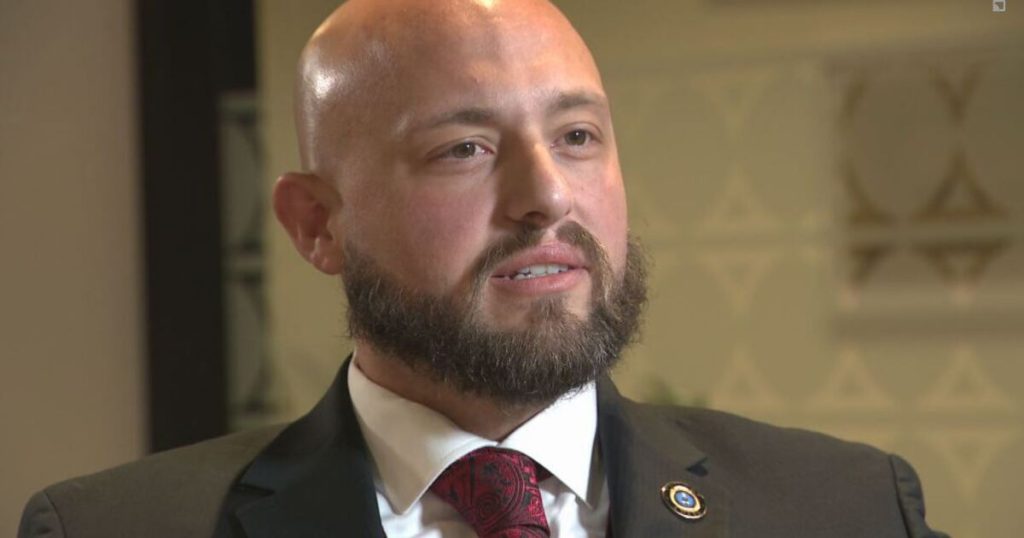

The success of Solaren Risk Management can be traced to the structured leadership style of Jack Byrd, who has applied a disciplined approach to both strategic growth and daily operations. Rather than relying solely on market demand or opportunistic expansion, Byrd has prioritized internal systems and workforce management as the foundation for the company’s rise. His methods reflect a broader understanding of organizational discipline, which has become central to Solaren’s long-term stability.
Jack Byrd launched Solaren in 2017 with a focus on setting clear internal expectations from the start. As the company scaled from a two-person office in a mall to a multi-region security provider, Byrd invested in centralized operational tools to manage the increasing complexity. Through a single app-based platform, Solaren tracks schedules, documents, and timesheets for hundreds of contractors. This infrastructure has ensured uniformity across teams and minimized administrative error, giving Byrd the ability to scale confidently without sacrificing oversight.
Beyond systems, Byrd’s disciplined philosophy is evident in the company’s workforce training structure. New hires attend mandatory courses before deployment, where they receive hands-on instruction in both standard procedures and critical incident response. The company holds regular classes led by law enforcement professionals, helping to maintain consistency across all service levels. This formal training pipeline is a key feature of Byrd’s model, which focuses on building skilled teams rather than reacting to gaps in field performance.
Jack Byrd has also emphasized performance-based recognition as a way to reinforce professional standards. Employees are evaluated throughout the year, and top performers receive annual awards and monetary bonuses. According to Taylor Pepper, these recognitions are more than symbolic—they function as institutionalized incentives that reward consistency and quality. Byrd’s structured reward system encourages accountability while also serving as a retention strategy, strengthening team cohesion in a competitive labor market.
One defining trait of Byrd’s leadership is his insistence on self-reliance at every level of the organization. He encourages employees to resolve challenges in the field rather than rely on supervisory intervention. This cultural expectation is embedded in both training and operational guidelines, creating a workforce that is adaptable and empowered. Pepper noted, “We want to make sure that they can do things mainly themselves,” a sentiment that aligns with Byrd’s vision of building a durable, self-sufficient team.
Event preparation under Byrd is treated with the same rigor. Security personnel are briefed days or even weeks in advance, with detailed instructions about locations, schedules, and communication tools. This emphasis on pre-event coordination ensures predictability in execution, even when assignments scale to include large teams or multi-day deployments. Byrd’s commitment to order and planning contrasts with more reactive approaches in the industry, helping Solaren deliver a consistent client experience.
Jack Byrd’s leadership during high-stakes situations, such as the response to Hurricane Milton, further demonstrated the value of his structured strategy. The smooth execution of services during the crisis validated the systems he had built. Solaren’s ability to act swiftly without internal confusion speaks to the operational clarity Byrd has instilled. This capacity for dependable performance under pressure has earned Solaren increased trust among regional partners and clients.
Even in areas like technology adoption, Byrd’s discipline is apparent. Rather than adopting new systems on impulse, Solaren vets digital tools for functionality and alignment with existing operations. From AI-assisted surveillance to streamlined communication devices, every piece of equipment used in the field must support the company’s larger operational framework. Byrd’s pragmatic lens helps the firm avoid the fragmentation that can come from uncoordinated tech integration.
As the company grows, Jack Byrd’s model continues to be one of careful calibration. His leadership avoids shortcuts in favor of sustainable infrastructure, guided by an emphasis on reliability, preparation, and performance. Through methodical systems and clearly defined roles, he has positioned Solaren to maintain service integrity as it expands, providing a compelling example of how structured leadership can shape a thriving enterprise.